

Intercultural Literacy
What is Cultural Literacy?
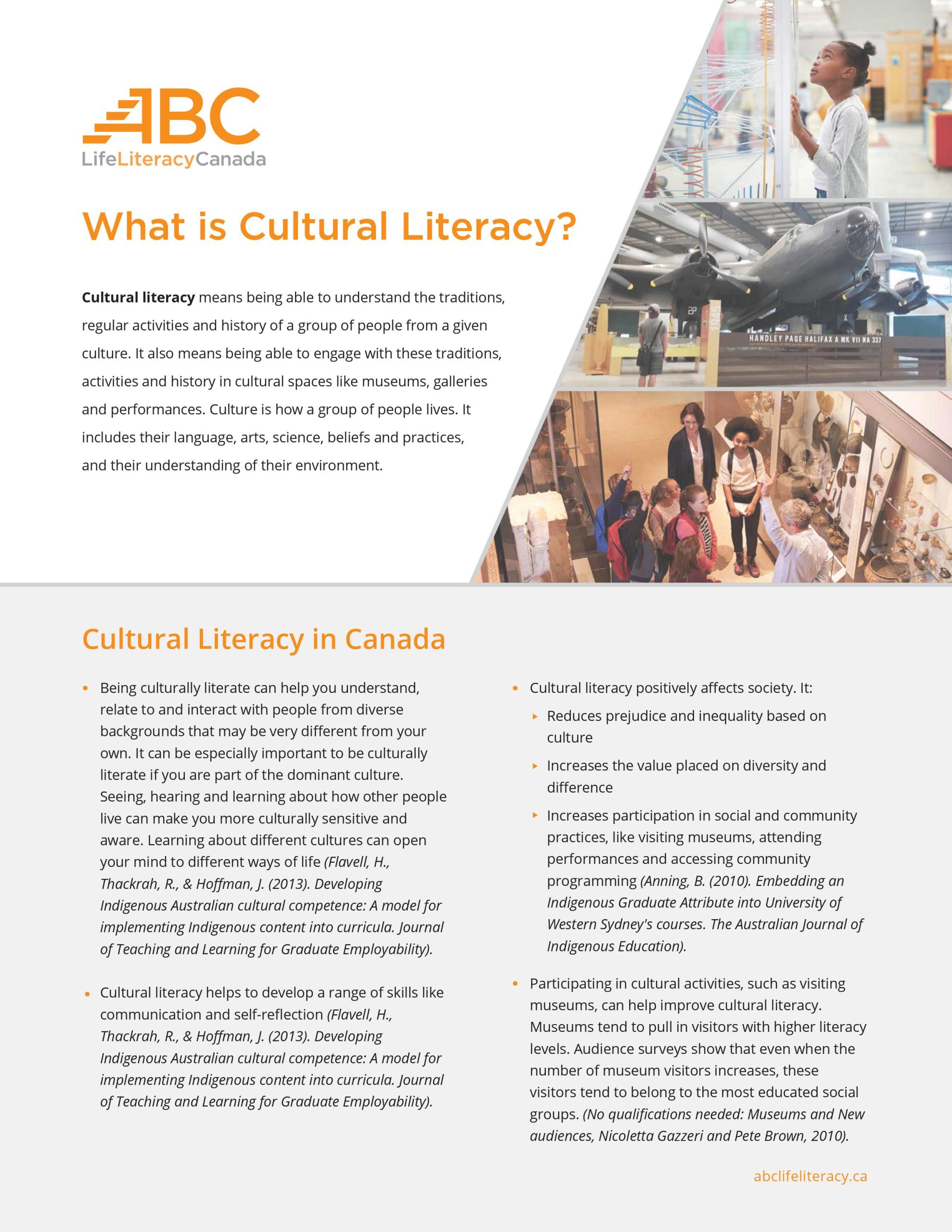
Cultural literacy means being able to understand the traditions, regular activities and history of a group of people from a given culture. It also means being able to engage with these traditions, activities and history in cultural spaces like museums, galleries and performances. Culture is how a group of people lives. It includes their language, arts, science, beliefs and practices, and their understanding of their environment.
Cultural Literacy in Canada
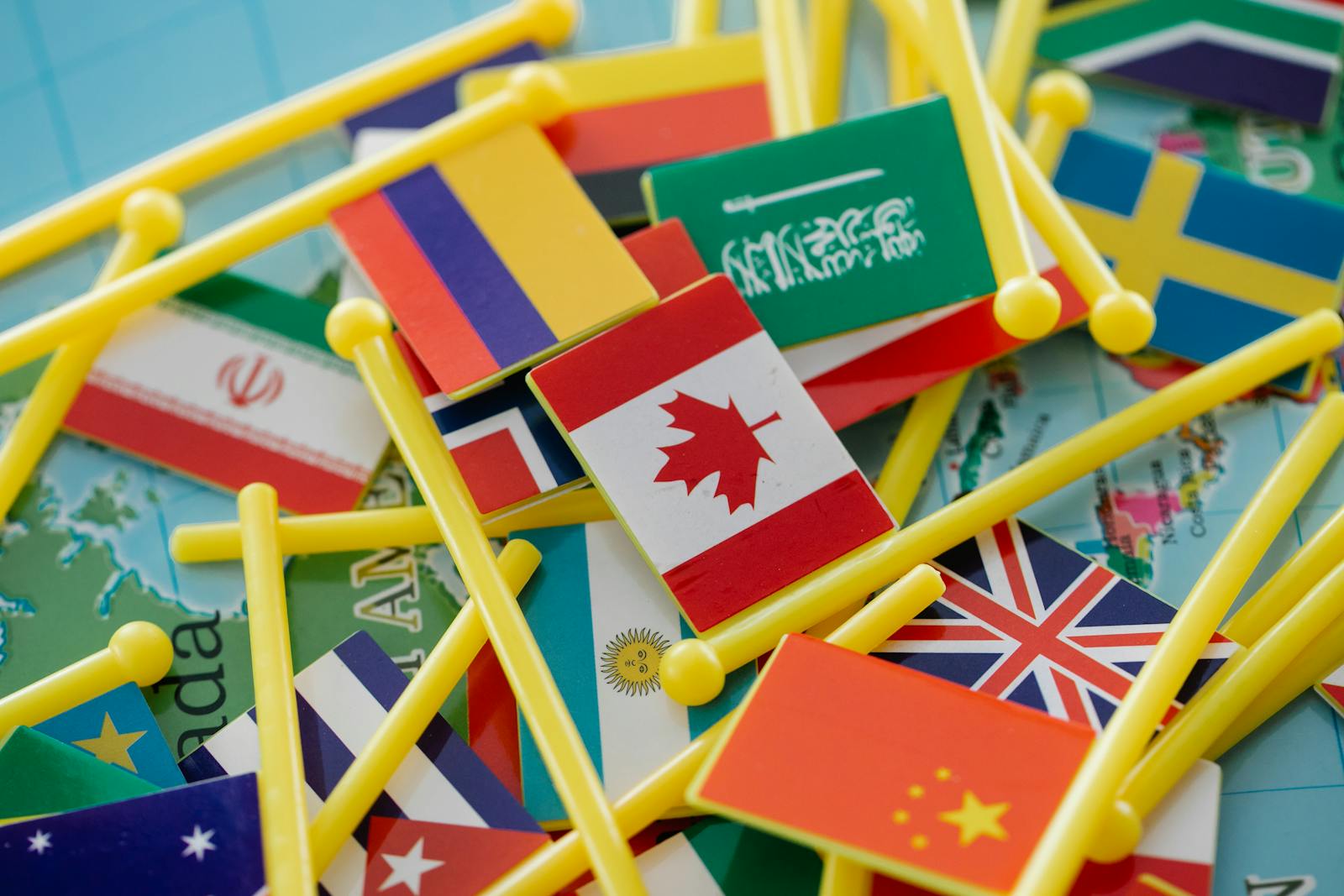
Understanding Cultural Literacy in Canada: Embracing Diversity and Inclusion
Cultural literacy in Canada is all about understanding the diverse traditions, activities, and histories of different cultural groups. Given that Canada is one of the most multicultural countries in the world, cultural literacy plays a crucial role in fostering inclusivity and reducing cultural misunderstandings.
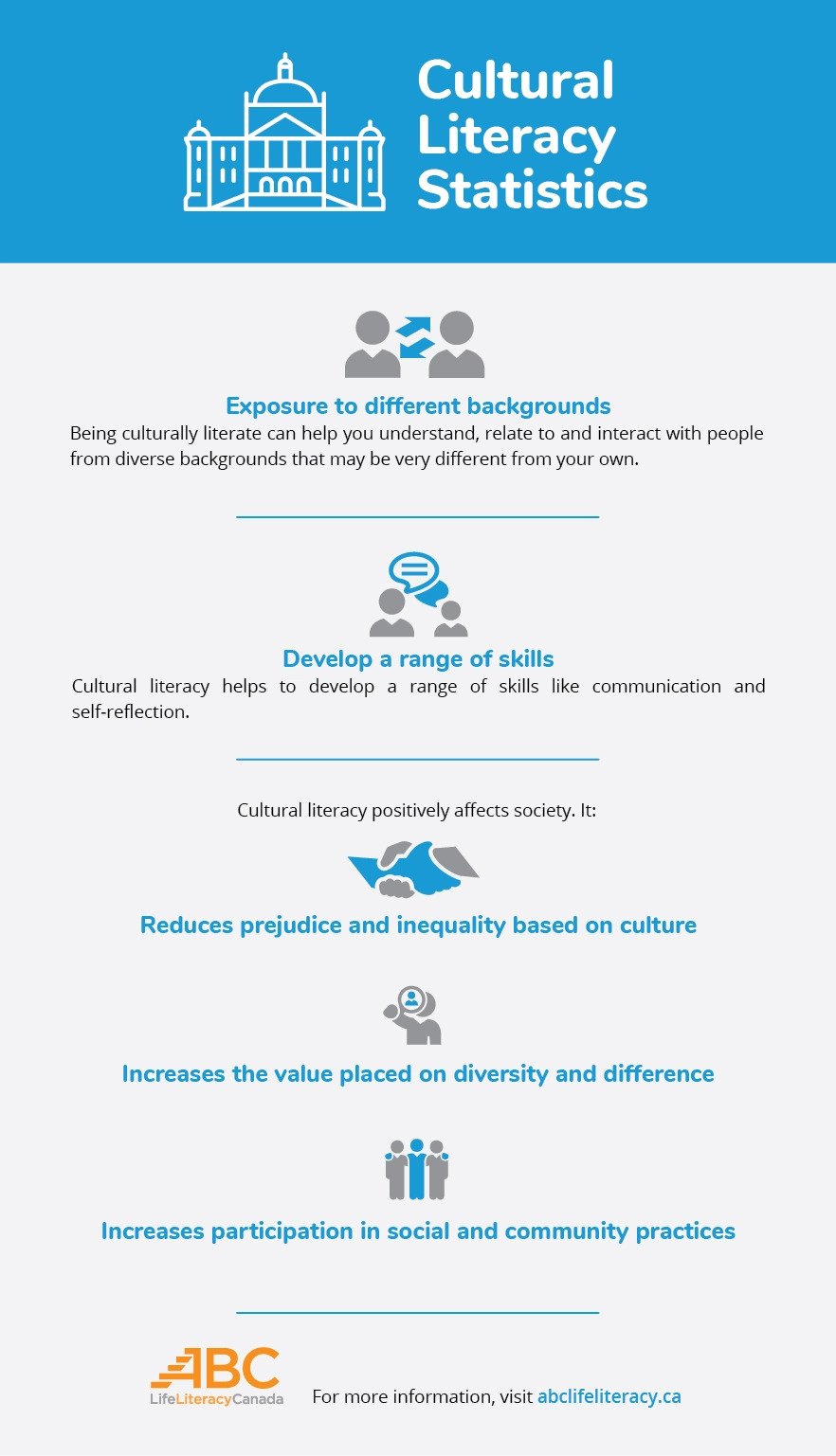
Why is Cultural Literacy Important?
Multilingualism

Multilingualism is a significant aspect of life in Canada. According to the 2016 census, 58% of Burnaby residents have a mother tongue that is neither English nor French. People in multilingual families in Canada can face challenges in developing English language skills while maintaining their home language.
How Clear Language Supports Cultural Literacy and Multilingualism
For example, here is a sentence in clear language:
“Clear Language helps your readers understand your message.“
Compare it to this version:
“The use of Clear Language (also called Plain Language) is capable of helping you to ensure your message is fully comprehended by your intended audience.“
Clear Language usually consists of:
- Short sentences with one point.
- Simple graphics that are easy to understand.
- Headings, sub-headings and bullet points.
- Some bold type to highlight important things.
- Lots of white space.
Why use Clear Language?
- It is fair, inclusive, and reaches people who don’t read well.
- For 42% of Canadian adults, low levels of literacy may keep them from fully participating in society.
- It puts the reader first and focuses on action.
How does Clear Language help?
- Saves time, and money because it gets the job done the first time.
- It reaches more people.
- It increases understanding while decreasing misunderstanding.
Resources
Multilingualism
Clear Language
- Plain Language Checklist for the Web, by the B.C. Government.
- Plain Language Course by the B.C. Government.
- Plain Language Guide by the Public Works and Government Services Canada Translation Bureau.
- The Five Steps to Plain Language by The Center for Plain Language.
- How to Write Clearly by the Publications Office of the European Union.
- Clear Language Resources in the Burnaby Public Library book collection:
Cultural Posts
Find more interesting information below: