
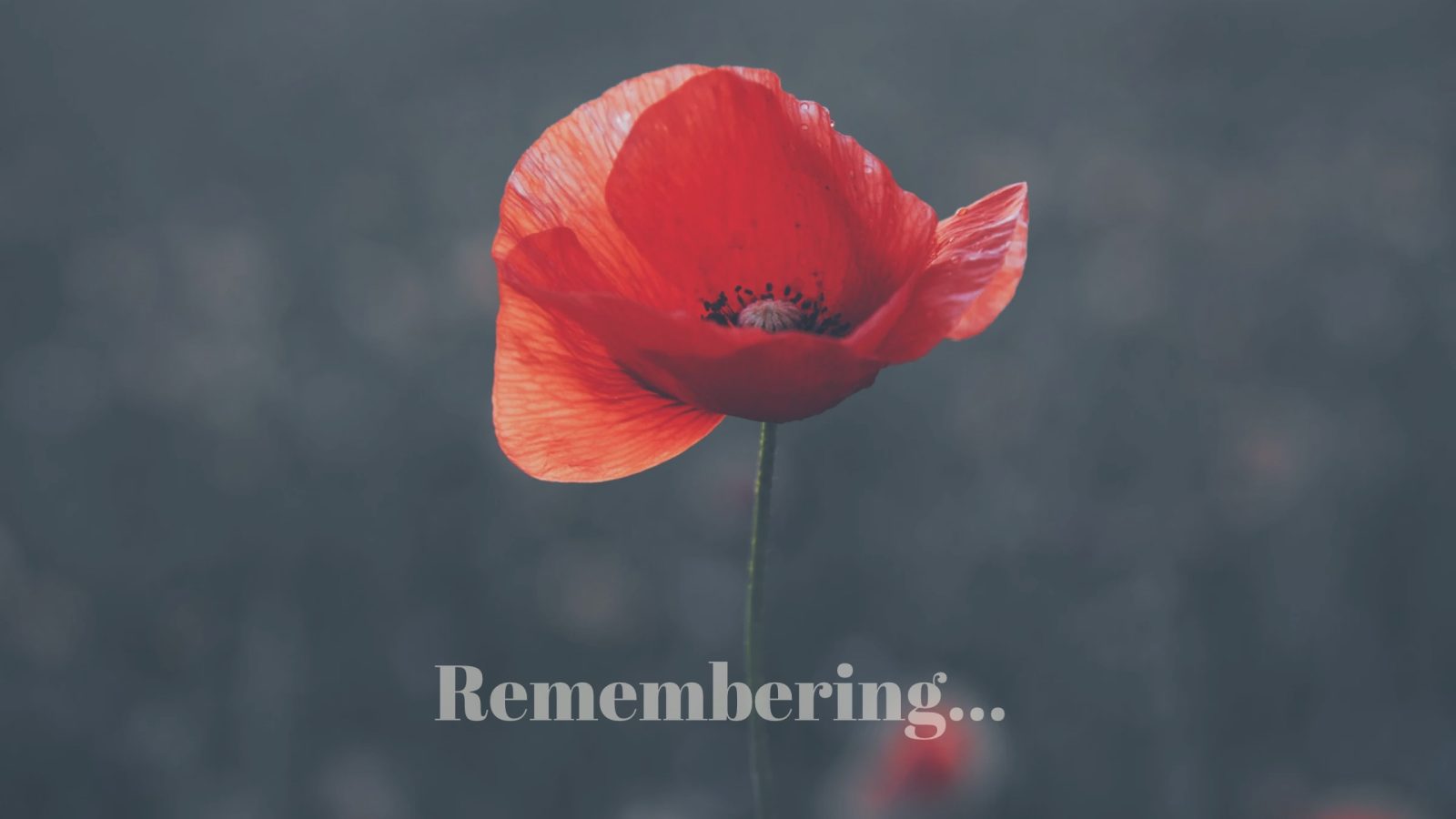
Every November, a small red flower appears on jackets, coats, and lapels across Canada.
The poppy is one of the most recognizable symbols of Remembrance Day, a time to pause, reflect, and honour the people who served our country, including those who lost their lives in war and military service.
But why a poppy? And what does November 11 mean?
Understanding the stories behind these traditions helps us remember the past and pass that knowledge on to future generations.
What is Remembrance Day?
Remembrance Day is observed in Canada every year on November 11. It honours the members of Canada’s Armed Forces who served and sacrificed in wars, conflicts, and peace support operations.
The date marks the anniversary of the Armistice that brought the First World War to an end on November 11, 1918.
At 11 a.m., many Canadians observe two minutes of silence: the eleventh hour of the eleventh day of the eleventh month. It is a moment to reflect, remember, and show respect.
Remembrance Day became the official name for the observance in Canada in 1931. You can learn more about its history through Veterans Affairs Canada.
Why is the poppy a symbol of remembrance?
The red poppy became a symbol of remembrance because of the flowers that grew in the fields of Flanders, in Belgium and France, during and after the First World War.
The landscape had been heavily disturbed by fighting, and red poppies appeared among the damaged fields and around soldiers’ graves.
In 1915, Canadian Lieutenant-Colonel and doctor John McCrae wrote the poem In Flanders Fields. Inspired by the poppies growing near the battlefields, his poem helped connect the flower with remembrance.
A few years later, the idea of wearing a poppy as a symbol of remembrance began to spread. In 1921, the Great War Veterans’ Association, a predecessor of the Royal Canadian Legion, adopted the poppy in Canada.
Today, the red poppy honours Canadians who have served and those who have died in military service. It reminds us that behind every name and every act of service are people, families, and stories.
You can explore the history of the symbol through the Royal Canadian Legion’s history of the poppy.
What does wearing a poppy mean?
Wearing a poppy is a personal way to show remembrance and respect.
In Canada, the Royal Canadian Legion leads the annual Poppy Campaign. Poppies are distributed freely, and donations are welcome. Funds raised help support Veterans and their families, including people experiencing financial difficulties and those who need assistance with care and other services.
The traditional lapel poppy is worn on the left side, close to the heart. Many people wear one during the remembrance period leading up to November 11.
The poppy is more than a flower worn for a few days. It represents a commitment to remember those who served and recognize the impact of their service.
To learn more about the campaign and how donations help, visit the Royal Canadian Legion’s Poppy Campaign.
Keeping the stories alive through learning
Remembrance is also about learning.
Books, poems, photographs, letters, documentaries, museums, and conversations with Veterans and their families can help us understand what happened in the past and how it shaped the world we live in today.
For children and young people, these stories can open thoughtful conversations about history, courage, service, peace, and the importance of understanding different experiences.
Here are a few simple ways families and educators can explore the meaning of Remembrance Day:
- Read together. Choose an age-appropriate book, poem, or story about Remembrance Day, Veterans, or Canadian history.
- Ask questions. Talk about what the poppy represents and why people gather on November 11.
- Explore local history. Visit a memorial, cenotaph, museum, or community remembrance event.
- Listen and learn. Give space to the stories and experiences shared by Veterans, service members, and their families.
- Create something meaningful. A drawing, a short reflection, or a handmade poppy can help children express what they have learned.
Learning about history doesn’t mean having all the answers. It means being curious, listening respectfully, and making room for different stories and perspectives.
Remembering together in our community
Remembrance Day is observed across Canada, but it is also meaningful at a local level.
Communities gather at cenotaphs, schools, libraries, and other public spaces to honour those who served. These gatherings bring generations together and help keep important stories alive.
Here in Burnaby, local Remembrance Day ceremonies offer opportunities for residents to come together, reflect, and remember. Families can also explore historical resources and learning materials through Veterans Affairs Canada’s Remembrance resources.
At Literacy Now Burnaby, we believe that stories and learning help connect people across generations. Understanding our history is one way to strengthen those connections. When we read, ask questions, share memories, and listen to others, we help ensure that important experiences are not forgotten.
Lest we forget
A poppy is small, but the meaning behind it is significant.
Remembrance Day invites us to pause, learn, and reflect on the people whose lives and service shaped our history. It also reminds us of the value of peace, understanding, and caring for one another.
Through books, conversations, and shared experiences, we can help younger generations understand why remembrance matters.
One story shared. One lesson learned. One moment to remember.
Lest we forget.